
As summer gets into full swing across Connecticut, families throughout the Greater Hartford area are eager to head out to their backyards. Whether you’re hosting a weekend barbecue in West Hartford, watching the kids play in Glastonbury, or just relaxing on your patio in Avon, nothing ruins an outdoor evening faster than a swarm of mosquitoes—or worse, the anxiety of finding a tick on your child or pet.
Connecticut is ground zero for tick-borne illnesses like Lyme disease, and our humid summer months keep mosquito populations thriving along the Connecticut River valley.
While chemical sprays offer temporary relief, the most effective, long-term way to protect your family is through smart landscape design modifications. By altering the physical environment around your home, you can naturally disrupt pest habitats and create a defensive barrier around your outdoor living spaces. Here is how to engineer a safer, pest-resistant backyard.
1. The 3-Foot Woodchip Border: A Friction Strip for Ticks
Deer ticks are incredibly sensitive to dehydration. They thrive in cool, damp, shaded environments—like the fallen leaf litter at the edge of wooded areas—and they rarely venture into open, sunny lawns on their own unless carried by a host.
If your Greater Hartford property borders a wooded lot, stone wall, or overgrown brush line, you have a direct highway for ticks entering your lawn.
-
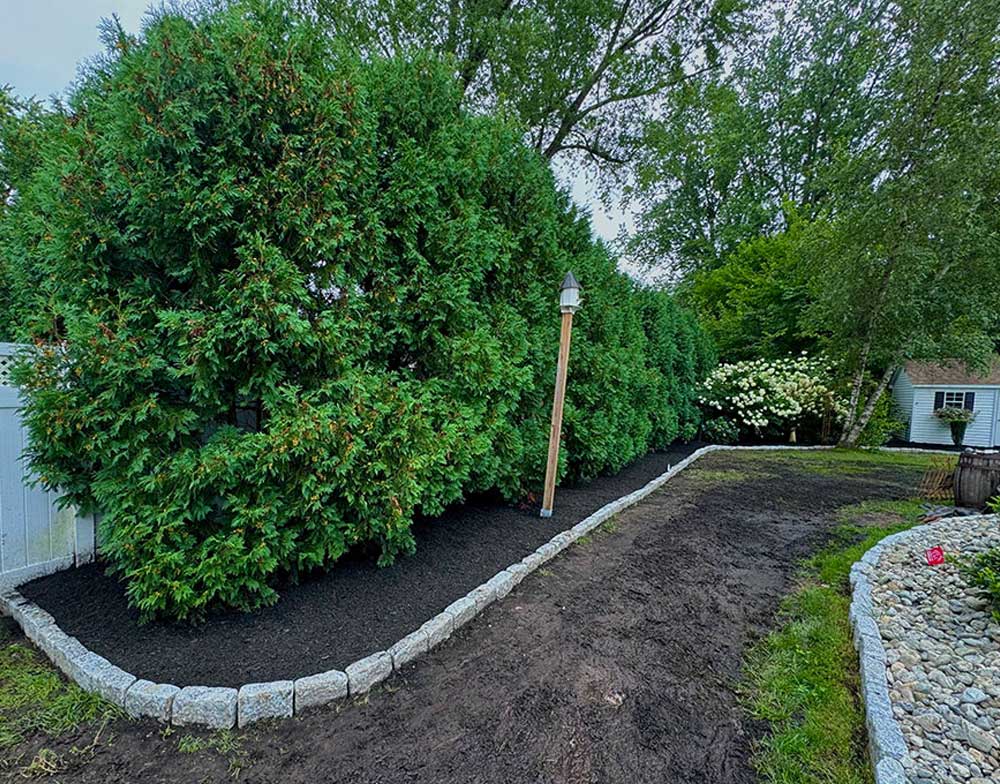
The Fix: Install a continuous, 3-foot-wide barrier of woodchips, bark mulch, or crushed stone along the entire perimeter where your lawn meets the woods.
-
Why it works: This strip acts as a physical barrier. The rough, dry, sun-exposed surfaces of woodchips or gravel dry out a tick’s body very quickly. Ticks are highly reluctant to cross this hot “friction strip,” keeping them confined to the woods and out of your grass.
2. Prune and Thin for Maximum Airflow and Sunlight
Both mosquitoes and ticks rely on high humidity to survive the heat of the day. Mosquitoes seek shelter in dense, low-hanging foliage, overgrown shrubbery, and tall grass where the air stays stagnant and damp.
-
The Fix: Elevate the canopy of your property’s perimeter trees and thin out dense ornamental shrubs.
-
Why it works: By pruning back the lowest branches of your trees and keeping your shrubs neatly manicured, you allow afternoon sunlight to pierce through to the ground and encourage natural cross-breezes. This simple airflow increase drops the ambient humidity below the threshold that ticks and mosquitoes can tolerate, forcing them to seek shelter elsewhere.
3. Build a Multi-Layered Pest Defense Zone
When designing your backyard layout, think of your property in zones. The goal is to move the highest-risk landscape elements far away from your primary gathering spaces.
🦟 The Standing Water Check: A single bottle cap full of stagnant water can breed hundreds of mosquitoes in less than a week. Walk your property after a typical Connecticut downpour and check corrugated gutter downspout extensions, low spots in plastic tarps, and clogged driveway drains.
Take Back Your Summer
You shouldn’t have to drench your kids in heavy chemical sprays just to enjoy an evening by the fire pit. By working with nature and restructuring your landscape to maximize sunlight, eliminate standing moisture, and block entry points, you can drastically reduce the pest pressure on your property.